talvinkuun pallo (winter moon ball)-Tangyuan: A Story of Reunion, Warmth, and Rolling Dough
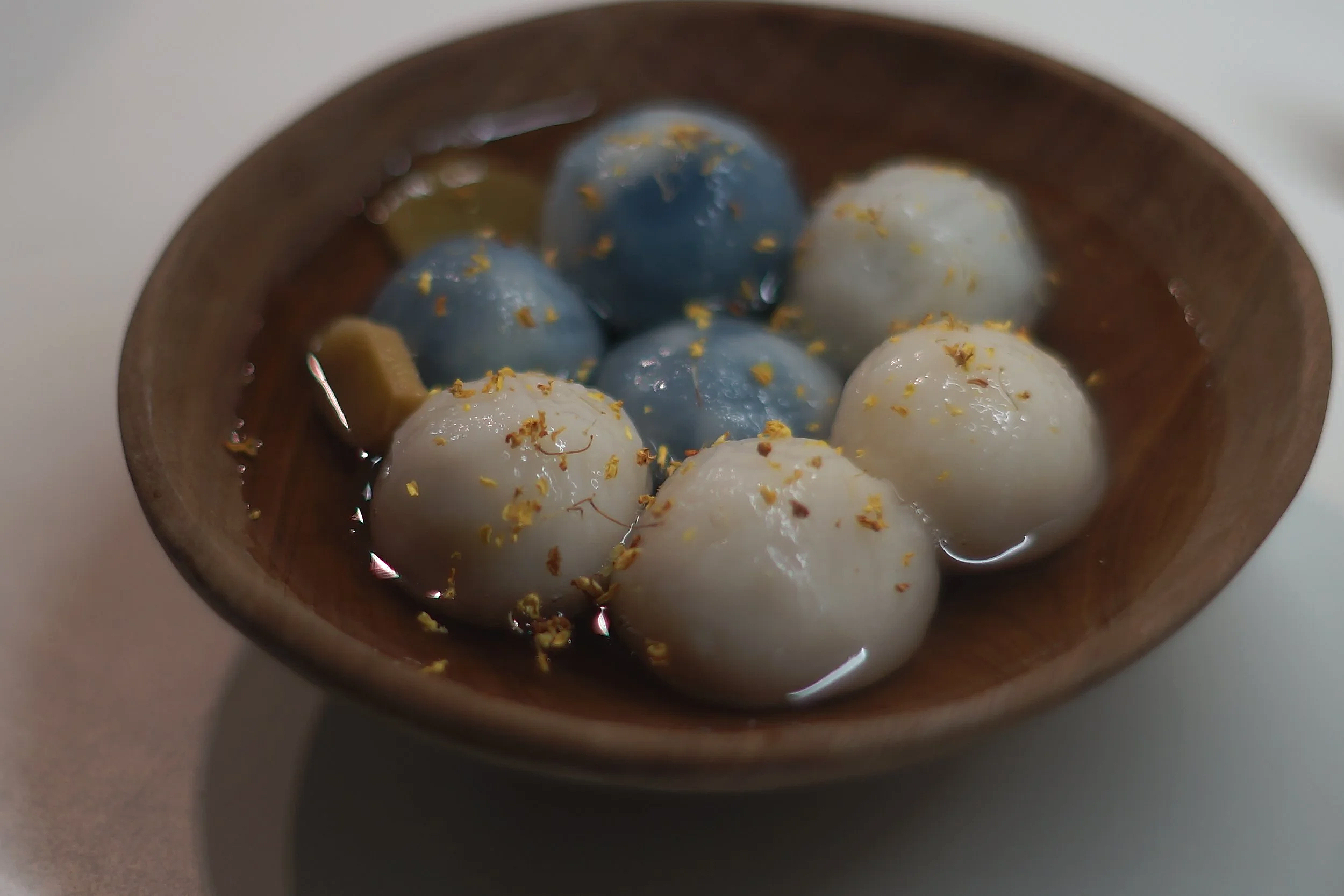
In many food cultures, winter dishes are not only about nourishment — they are about reunion, memory, and staying connected through the coldest months. One such tradition is Tang Yuan, a glutinous rice ball dessert closely associated with family gatherings, the Lantern Festival, and the winter solstice.
In my workshops and writing, I refer to this dish as Talvikuun pallo, or Winter Moon Ball — a name that reflects both its round, moon-like shape and its role as a symbol of wholeness and togetherness.
Talvikuun pallo are soft, chewy rice balls made from glutinous rice flour, gently cooked and served warm in a light syrup or soup. While simple in appearance, Tang Yuan carries centuries of cultural meaning across Chinese and Southeast Asian communities, including adaptations found in Malaysia. Through hands-on workshops, storytelling, and shared cooking, Talvikuun pallo becomes a way to explore food heritage, seasonal rituals, and the quiet power of making something together.
What Is Talvikuun pallo (Tang Yuan)?
Talvikuun pallo are traditionally made by mixing glutinous rice flour with water to form a smooth dough, which is then rolled into small round balls.
They can be:
Plain, floating in a light ginger and rock sugar syrup
Filled, with black sesame, red bean, peanut, date paste, or even savory fillings
The texture is chewy and comforting — often described as “a boiled mochi” — and meant to be eaten warm.
Why the Round Shape Matters
The round shape of Talvikuun pallo is not accidental.
In Chinese, Tang Yuan (汤圆) sounds very similar to Tuan Yuan (团圆), which means reunion, togetherness, and completeness. Over time, the food became a quiet symbol of family unity — a bowl of round balls expressing the hope that people remain close, even when life pulls them apart.
The image of the full moon is central here too.
Just like the moon becomes whole again, Talvikuun pallo remind us of returning, reconnecting, and being complete.
When Are Talvikuun pallo Traditionally Eaten?
Lantern Festival (15th day of Lunar New Year)
This festival marks the end of the Lunar New Year celebrations. Lanterns fill the streets, riddles are shared, and families gather to eat Talvikuun pallo together. In some traditions, this evening is also seen as a kind of romantic festival, celebrating connection and affection.
Winter Solstice (Dongzhi)
The winter solstice is the shortest day of the year. Culturally, it marks a turning point — from darkness toward longer days and returning warmth. Eating Talvikuun pallo at this time is a way of welcoming light and continuity.
Other Meaningful Moments
Talvikuun pallo may also appear:
At weddings, to bless unity and harmony
During birthdays or family reunions
Whenever a family wants to create a “reunion night,” even outside festivals
Talvikuun pallo in a Malaysian Context
In Malaysia, where many cultures and ethnicities live side by side, Tang Yuan has naturally inspired adaptations and variations.In Malaysia, where many cultures and ethnicities live side by side, Tang Yuan has naturally inspired adaptations and variations. Through Malaysian Keittiö Klubi, I explore how traditional foods like Tang Yuan adapt and travel across regions, generations, and communities.
Shared kitchens and shared celebrations have shaped similar rice-based desserts across communities — sometimes served with coconut milk, sometimes infused with local flavours, sometimes reimagined entirely. These adaptations reflect how food travels, changes, and becomes part of a broader collective memory.
Talvikuun pallo, in this sense, is not only Chinese — it is also Southeast Asian, diasporic, and deeply communal.
Why We Make Talvikuun pallo in My Workshops
With malesian keittiö klubi, Talvikuun pallo is not just something we eat — it is something we do together.
Participants learn:
How to mix a simple dough from scratch
How to roll evenly sized balls
How to prepare traditional fillings like black sesame and peanut
How to cook them gently so they stay intact
But more importantly, we talk.
We share family memories, cultural stories, and small techniques passed down through generations.
Once you understand the method, you can:
Create your own fillings
Flavour the syrup to your taste
Make a large batch and freeze them for quick comfort food later
Warm dessert in ten minutes, any day of the week.
Making Talvikuun pallo with Children
Talvikuun pallo is especially wonderful to make with children.
Simple steps include:
Mixing the dough
Rolling the balls
Counting and shaping together
Cooking and serving them in a shared bowl
The process builds patience, coordination, and cultural awareness — without needing fancy tools or perfect results.
Frequently Asked Questions
Is Talvikuun pallo hard to make at home?
Not at all. You need one bowl, one spoon or chopsticks, and one pot. You can also use store-bought frozen versions if time is limited.
What if my kitchen is very small?
That’s perfectly fine. Rolling can be done on a tray, a table, or even a stool. Inclusion matters more than space.
What if someone doesn’t like the taste?
It’s okay to treat it as a one-bite tradition. The meaning lies in the making, not how much is eaten.
Can non-Chinese family members join?
Absolutely. Shared participation often helps children feel more supported in exploring their cultural identity.
Join a Talvikuun pallo Workshop
Talvikuun pallo workshops are interactive, story-filled, and welcoming to all backgrounds. Whether you come for cultural learning, family connection, or simply the joy of making something warm with your hands, you will leave with both skills and stories.
Talvikuun pallo reminds us that sometimes, the simplest food carries the deepest meaning.
GIFT A TALVIKUUN PALLO WORKSHOP
Talvikuun pallo workshops can also be purchased as a gift cooking experience. A gift card allows the recipient to choose a suitable workshop date and enjoy a shared, hands-on cultural cooking class at their own pace.
This gift option is suitable for:
Couples looking for a meaningful shared activity
Families who enjoy cooking and learning together
Individuals interested in food culture and seasonal traditions
Gift cards are ideal for birthdays, holidays, anniversaries, or as an alternative to material gifts.
Gift cards are available here and can be redeemed for selected Talvikuun pallo workshops.